

Some of the best upgrades in a remodel are the ones you plan before the walls close. Switchable privacy glass is a good example. With one button, a glass door or window goes from crystal clear to fully frosted. There are no blinds to dust, no cords, and nothing hanging in front of a beautiful steel door.
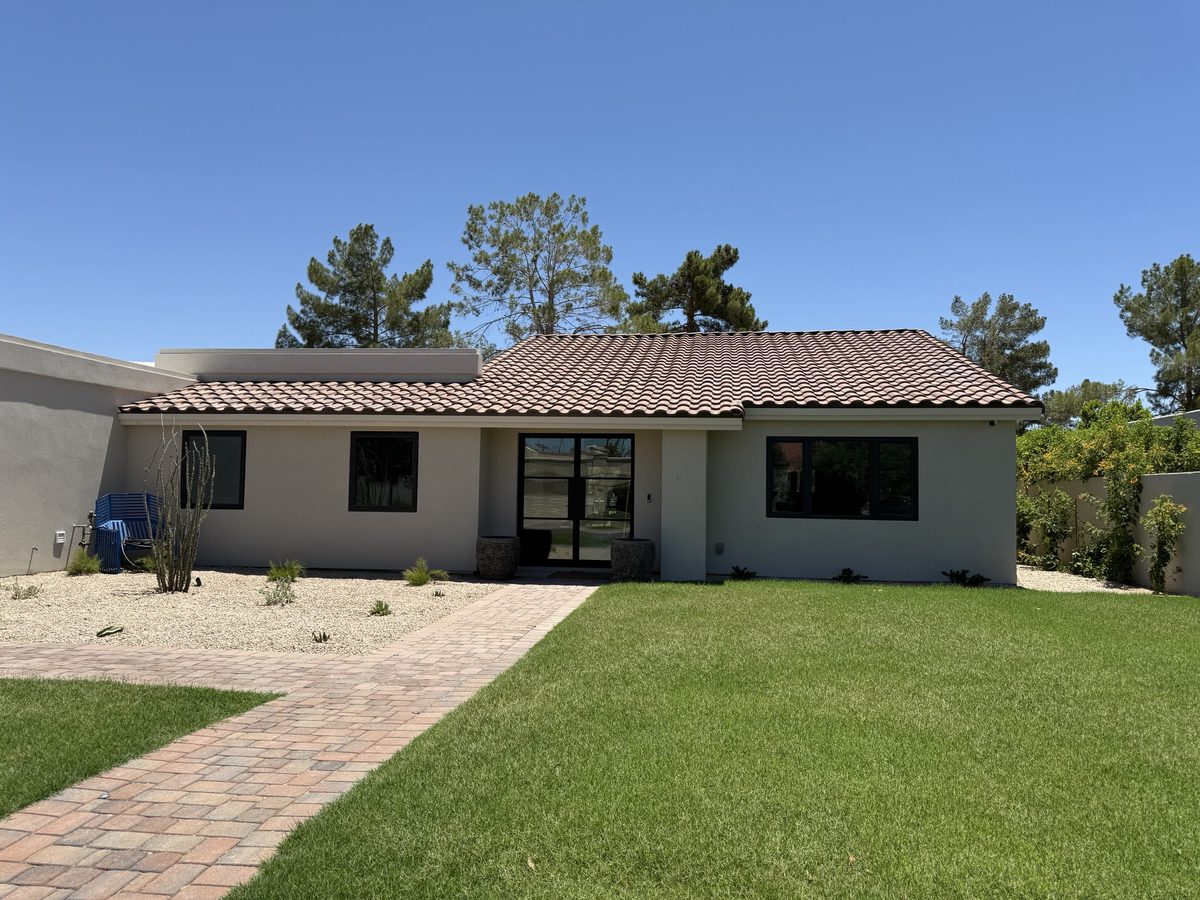
We recently installed it on a front entry in Phoenix. Here's how it works, what it costs, and why planning it early is what makes it worth it.
How It Works
Most residential privacy glass uses a thin liquid-crystal film called PDLC, sealed between layers of glass. With the power off, the crystals scatter light and the glass looks frosted. With the power on, they line up and the glass turns clear in a fraction of a second.
A few things homeowners like:
- It's private by default. If the power goes out, the glass goes frosted, not clear.
- It uses very little power. The film draws only a few watts per square meter.
- It blocks UV when frosted, which helps protect floors and furniture from Arizona sun.
- It can be controlled by a remote, a wall switch, or a smart-home system.
Why Pre-Planning Matters
Privacy glass is easy when it's part of the plan and expensive when it's an afterthought. The glass needs a small power supply and a low-voltage wire run to the door or window. On a remodel, we plan that during design and rough it in before drywall, so the wiring is hidden and the controller has a home.
The other key is ordering it with the door or window itself. Laminated privacy glass is built into the unit at the factory, so it's far simpler and cleaner than retrofitting film onto glass later.
This is the same thinking we apply to every remodel: plan for how you'll live in the house in five or ten years, not just on move-in day. Conduit for future solar or EV charging, blocking in the walls for grab bars, a larger electrical panel. These cost little during construction and a lot afterward.
What It Costs Compared to Blinds
Privacy glass is a premium product. National guides put PDLC privacy glass at roughly $85 to $130 per square foot. Motorized blinds typically run about $500 per window installed, and more for large openings and premium fabrics.
So for a small window, blinds are cheaper. Where privacy glass makes sense is on big, statement openings like steel entry doors, glass walls and large sliders. Those openings need custom, oversized, motorized treatments that still hang in front of the glass you paid for. Priced against that, and ordered with the door instead of added later, privacy glass can come in close to custom motorized shades, sometimes for less, and you keep the clean look.
Where It Works Best
- Front entry doors, for privacy without hiding the door
- Bathroom windows and shower glass
- Home offices and glass partitions
- Street-facing windows in homes close to the sidewalk
Thinking About It for Your Remodel?
If you're planning a new entry door, windows or a bathroom, bring it up during design. We'll check the opening, plan the wiring and price it against the alternatives so you can decide with real numbers.
Get a starting price range in about two minutes with our whole-home estimator, then book a free 15-minute call to talk it through.
More from the blog
- Bathroom Remodel Cost and Timeline in Goodyear, AZ
- Quartz vs. Quartzite vs. Granite vs. Porcelain: Which Countertop Holds Up in Arizona?
- Building a Casita in Buckeye, Goodyear or Phoenix: What Arizona's ADU Law Means for Your Lot
- Kitchen Remodel Cost and Timeline in Buckeye, AZ
- Updating Your Bathroom in Surprise: What to Expect
- How to Tell If a Wall Is Load-Bearing in Your Surprise Home