

Countertops take more abuse in the West Valley than almost anywhere else. Hot pans, hard water, kids, and in a lot of homes, afternoon sun pouring through a west-facing window or across an outdoor kitchen. The material that looks best in the showroom isn't always the one that still looks right five summers later.
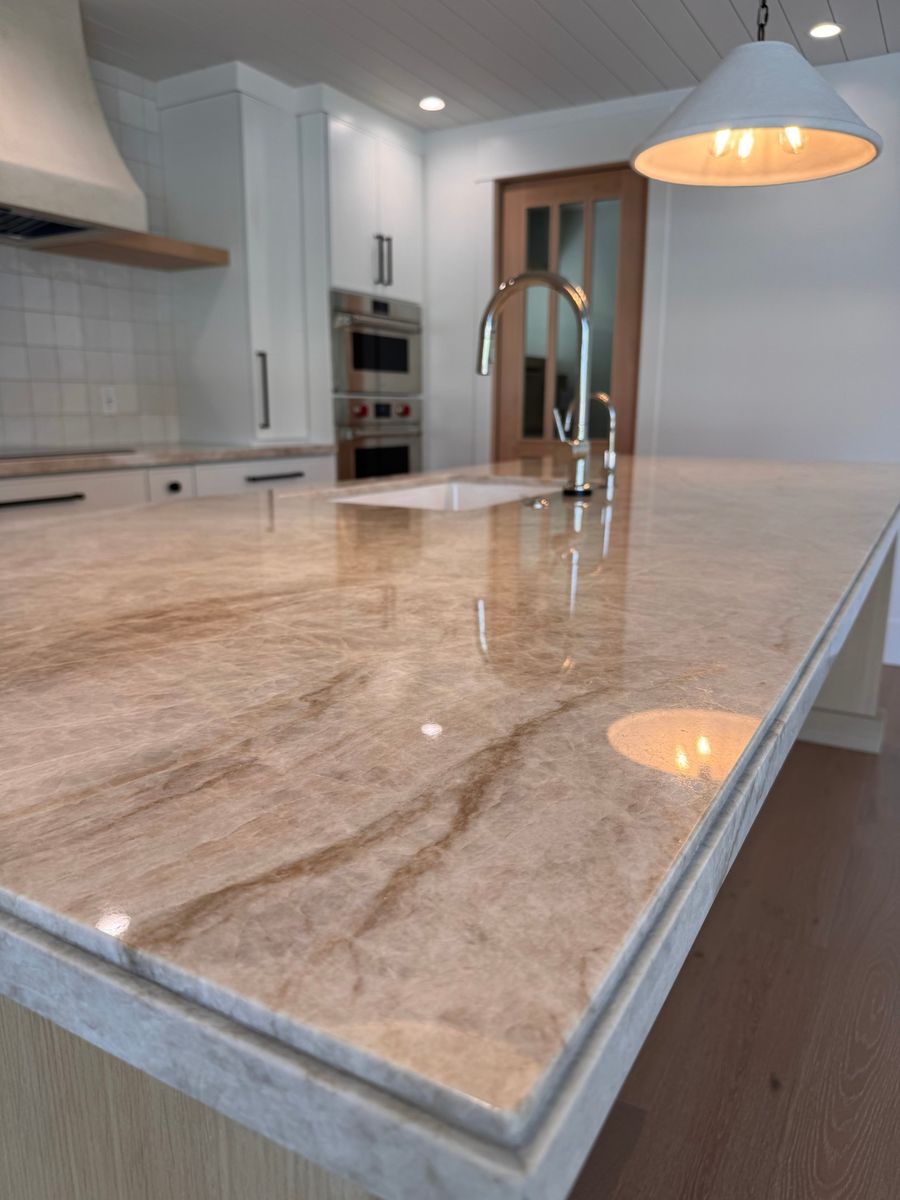
Here's how the four materials we install most often actually behave in Arizona, and how we help clients choose.
The Short Answer
- Quartz is the easiest to live with indoors, but it doesn't like direct heat or strong sun.
- Quartzite is natural stone that handles heat and sun well and gives you the marble look without marble's softness.
- Granite is tough, heat-resistant and has a lot of variety, and it costs less than most quartzite.
- Porcelain slab shrugs off heat, sun and stains, and it's the most worry-free choice outdoors.
Most kitchens we build use quartz or quartzite inside. Outdoor kitchens and sunny bars usually get quartzite, granite or porcelain.
Quartz: Low Maintenance, With Two Weak Spots
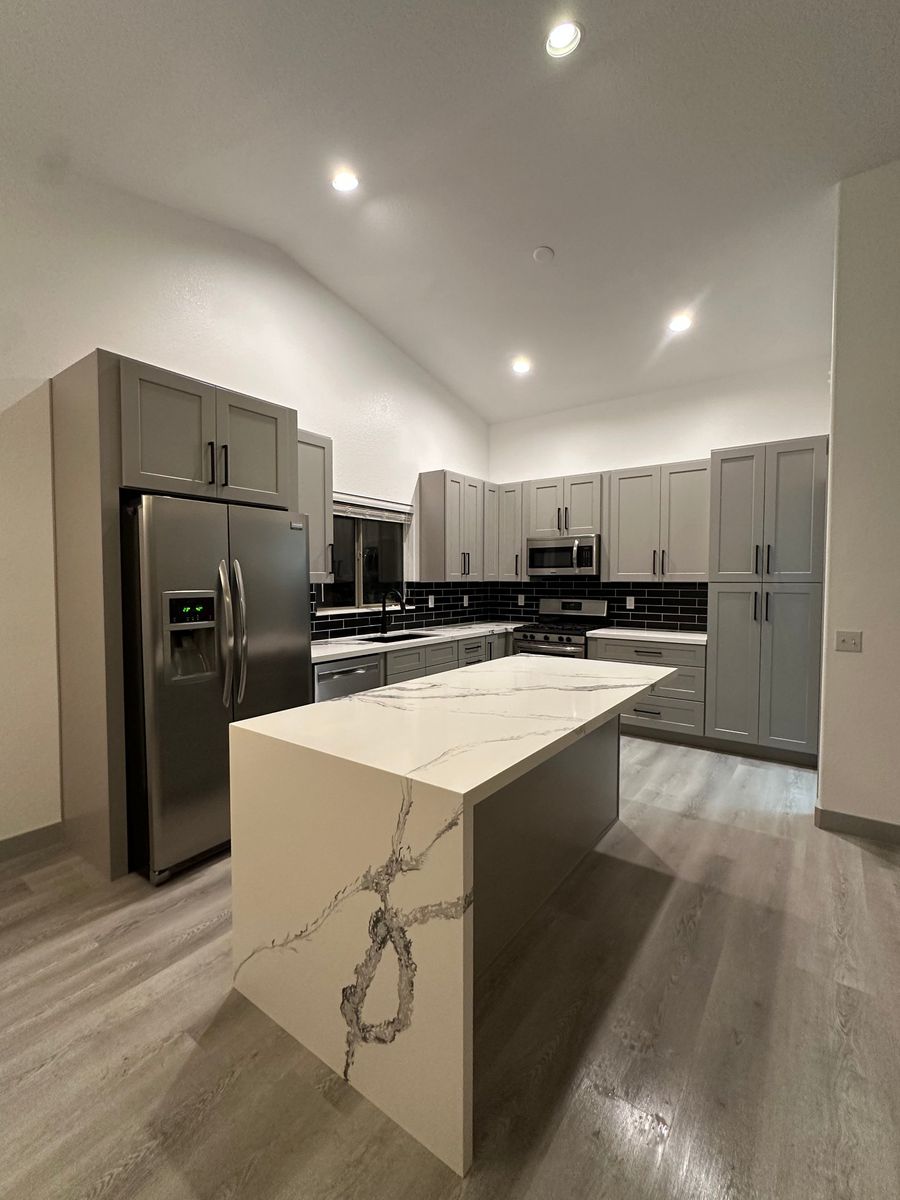
Quartz is engineered: crushed stone bound with resin. That resin is what makes it non-porous, so it never needs sealing and coffee, wine and oil wipe right off. It's also consistent, so the slab you approve is the slab you get.
The same resin is its weak spot. A hot pan straight off the burner can leave a scorch mark or a cloudy ring, so trivets are a must. And direct sunlight is hard on it. Fine Homebuilding notes that standard engineered quartz is a poor fit for outdoor kitchens in direct sun because UV can yellow and fade it.
A few manufacturers now make outdoor-rated quartz with UV protection. If you love the quartz look for a patio, ask us about those lines rather than using an indoor slab outside.
Best for: busy indoor kitchens, baths and laundry rooms where you want zero upkeep.
Quartzite: The Natural Stone That Earns Its Price
Quartzite is natural sandstone that's been transformed by heat and pressure into one of the hardest countertop materials there is. It has the soft, flowing veining people love in marble, but it stands up to heat, scratches and sun far better.
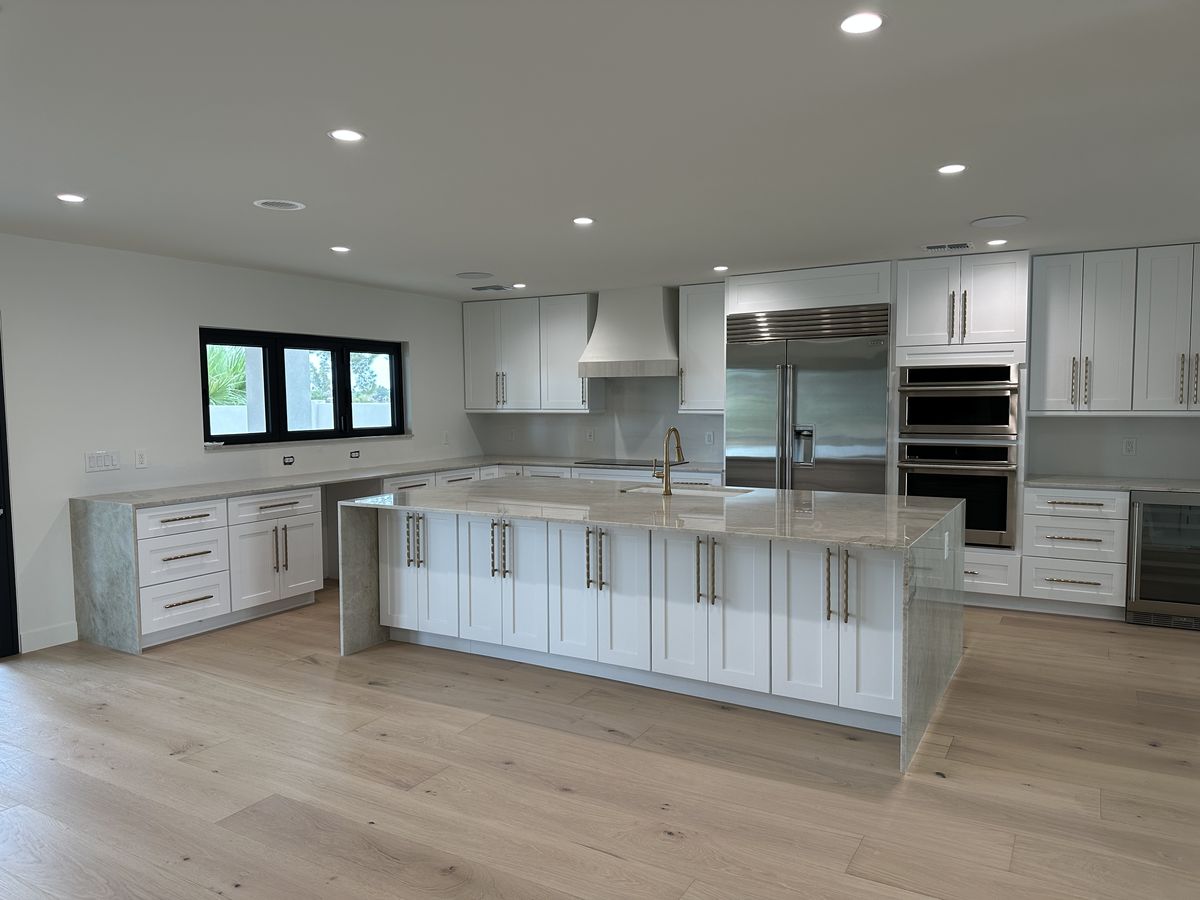
We use a lot of it. Taj Mahal, Perla Santana and Perla Rocca are client favorites, and quartzite works beautifully for waterfall islands, full-height slab backsplashes, range hoods and shower curbs.
Two things to know:
- It needs sealing. Plan on resealing about once a year or as the fabricator recommends, and wipe up acidic spills like lemon juice and wine before they sit.
- Not every slab sold as "quartzite" really is. Some softer stones are marketed under the name. We check the slab before you commit so you know what you're getting.
Best for: statement islands, slab backsplashes and anyone who wants natural stone that can actually be used.
Granite: Still a Workhorse
Granite has fallen out of fashion in some design circles, but it remains one of the most practical surfaces you can buy. It handles hot pans and sun well, resists scratches, and comes in everything from quiet, uniform grays to dramatic, moving patterns. Honed and leathered finishes give it a much more modern look than the polished speckled granite of the 2000s.
Like quartzite, it should be sealed. Outdoors, sealing also helps it keep its color in full sun.
Best for: outdoor kitchens, heavy-use kitchens and buyers who want natural stone at a lower price than most quartzite.
Porcelain Slab: Built for Heat and Sun
Large-format porcelain slabs are fired at extreme temperatures, which makes them dense, stain-proof and UV-stable. A hot pan won't hurt them and the sun won't fade them, which is why porcelain is one of our top recommendations for outdoor kitchens and west-facing bars.
The tradeoff is edges. Porcelain is hard but brittle, so a dropped cast-iron pan can chip an edge, and the pattern is printed on the surface rather than running all the way through. That means edge details are designed differently than with stone.
Best for: outdoor kitchens, fireplace walls, and full-height wall cladding.
What About Marble?
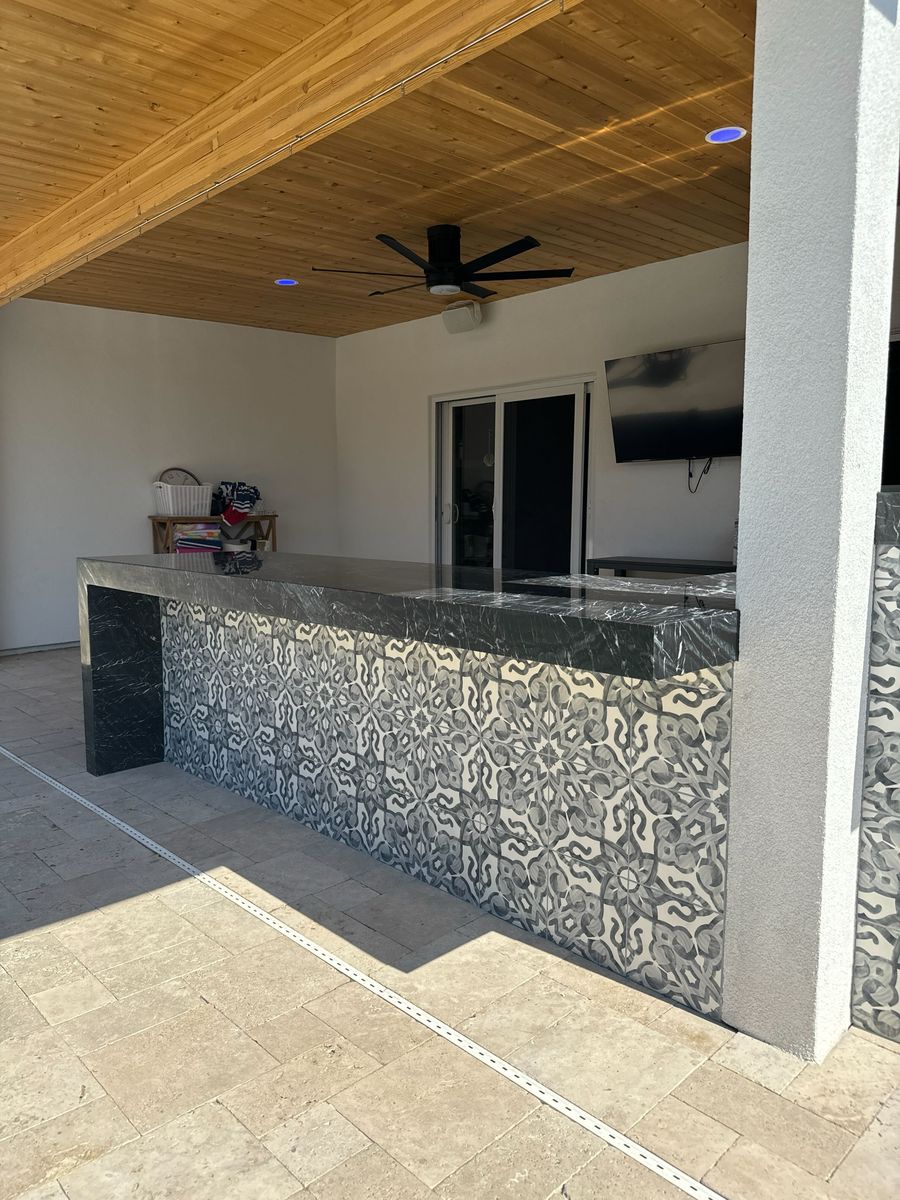
Real marble is gorgeous and we install it, especially in bathrooms, on bars and for wainscot. In a working kitchen it will etch from acids and scratch more easily, so it suits people who like the way stone ages. For outdoor bars, we put it under a roof, like the mitered marble patio bar in our gallery.
How Arizona Changes the Decision
- Sun: If the counter gets direct afternoon light, through a window or outdoors, skip standard quartz.
- Heat: Outdoor counters can get hot enough to burn in July, and dark colors hold the most heat. Lighter stone and shade structures make outdoor kitchens far more usable.
- Hard water: Our water leaves mineral spots on everything. Honed and leathered finishes hide spots better than high polish.
- Thermal swings: Outdoor slabs need proper support and expansion space at the joints. That's a fabrication and install detail, not just a material choice.
Comparing Them Side by Side
| Quartz | Quartzite | Granite | Porcelain | |
|---|---|---|---|---|
| Heat from a hot pan | Use trivets | Handles it well | Handles it well | Handles it well |
| Direct sun / outdoors | Not standard slabs | Good | Good, keep sealed | Excellent |
| Sealing | Never | Yes | Yes | Never |
| Stain resistance | Excellent | Good when sealed | Good when sealed | Excellent |
| Look | Consistent, any style | Marble-like natural veining | Natural, wide range | Any look, printed |
How We Help You Choose
We start with how you cook, where the sun hits, and how much upkeep you're comfortable with, and then we look at slabs together. You can browse our natural stone inventory to see what's in stock, and every countertop is priced into your fixed contract before work starts.
If you're planning a kitchen and want to see how countertop choices affect the budget, try our kitchen estimator for a planning range.
Get a starting price range in about two minutes with our kitchen estimator, then book a free 15-minute call to talk it through.
More from the blog
- Bathroom Remodel Cost and Timeline in Goodyear, AZ
- Building a Casita in Buckeye, Goodyear or Phoenix: What Arizona's ADU Law Means for Your Lot
- Switchable Privacy Glass: Clear or Frosted at the Press of a Button
- Kitchen Remodel Cost and Timeline in Buckeye, AZ
- Updating Your Bathroom in Surprise: What to Expect
- How to Tell If a Wall Is Load-Bearing in Your Surprise Home